Why range of motion is the first number your therapist watches
Before strength, before stamina, before return-to-sport testing — there is one measurement that quietly predicts how a rehabilitation journey will unfold.
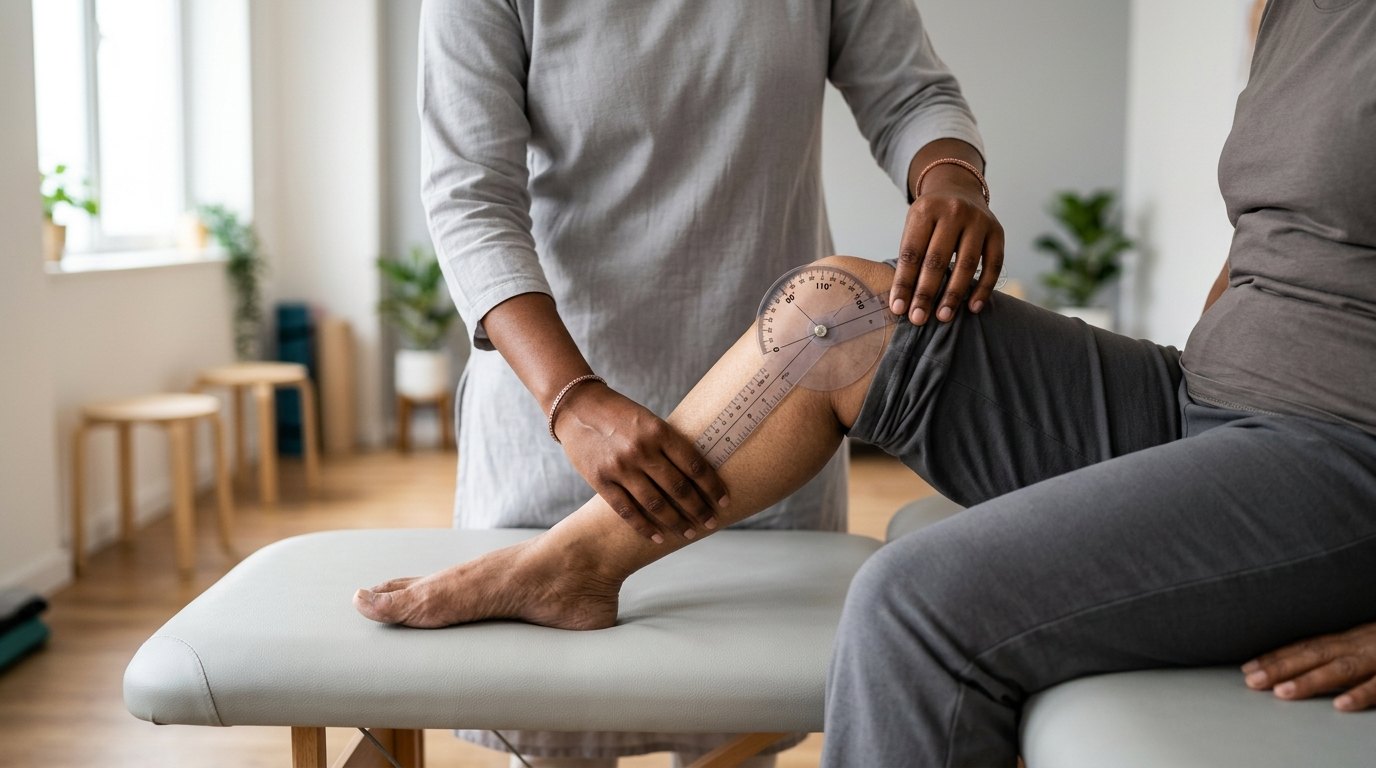
The measurement that comes first
Ask an experienced physiotherapist what they check first at every session and the answer is rarely strength. It is range of motion — how far a joint actually moves. After surgery or injury, the window to restore motion is often narrow: tissue heals, scar forms, and joints stiffen on a timeline that does not wait for motivation.
A knee that reaches 90 degrees of flexion in week two after replacement is on a very different trajectory than one stuck at 70. Both patients may feel fine at rest. Only the number reveals the difference — and only a professional tracking that number can act on it in time.
Range of motion is the vital sign of rehabilitation — the first thing that moves, and the first thing that tells the truth.
What the number actually tells your care team
Range of motion is a proxy for several things at once: swelling control, pain management, tissue healing and exercise adherence. When flexion stalls, a skilled therapist reads it like a chart — is the home programme being done? Is swelling the blocker? Does the plan need to change?
This is why PranIQ tracks range of motion longitudinally rather than at isolated appointments. A single reading is a snapshot; a trend line is a story. Seeing flexion move from 108° to 122° over four weeks tells everyone — patient, therapist and doctor — that the plan is working.
From clinic measurement to continuous visibility
Traditionally, range of motion is measured with a goniometer during appointments — accurate, but infrequent. Camera-assisted movement analysis can now supplement these measurements between sessions, using a smartphone or tablet to estimate joint angles during supported exercises.
These technology-assisted measurements do not replace the therapist's hands or judgement. They add frequency to a measurement that matters, so that small stalls are caught in week one rather than discovered in week six.
What this means for your recovery
If you are starting rehabilitation, expect your therapist to set a range-of-motion baseline early and revisit it often. Ask what your current number is, what the next milestone should be, and what to do if progress stalls. Recovery is easier to trust when you can see it moving.
This article is for general information and does not constitute medical advice, diagnosis or treatment. Individual decisions should be made with appropriately qualified healthcare professionals.