The six weeks after knee replacement that shape the next six years
The operation takes a few hours. The outcome is decided in the weeks that follow — by structure, adherence and early, honest measurement.
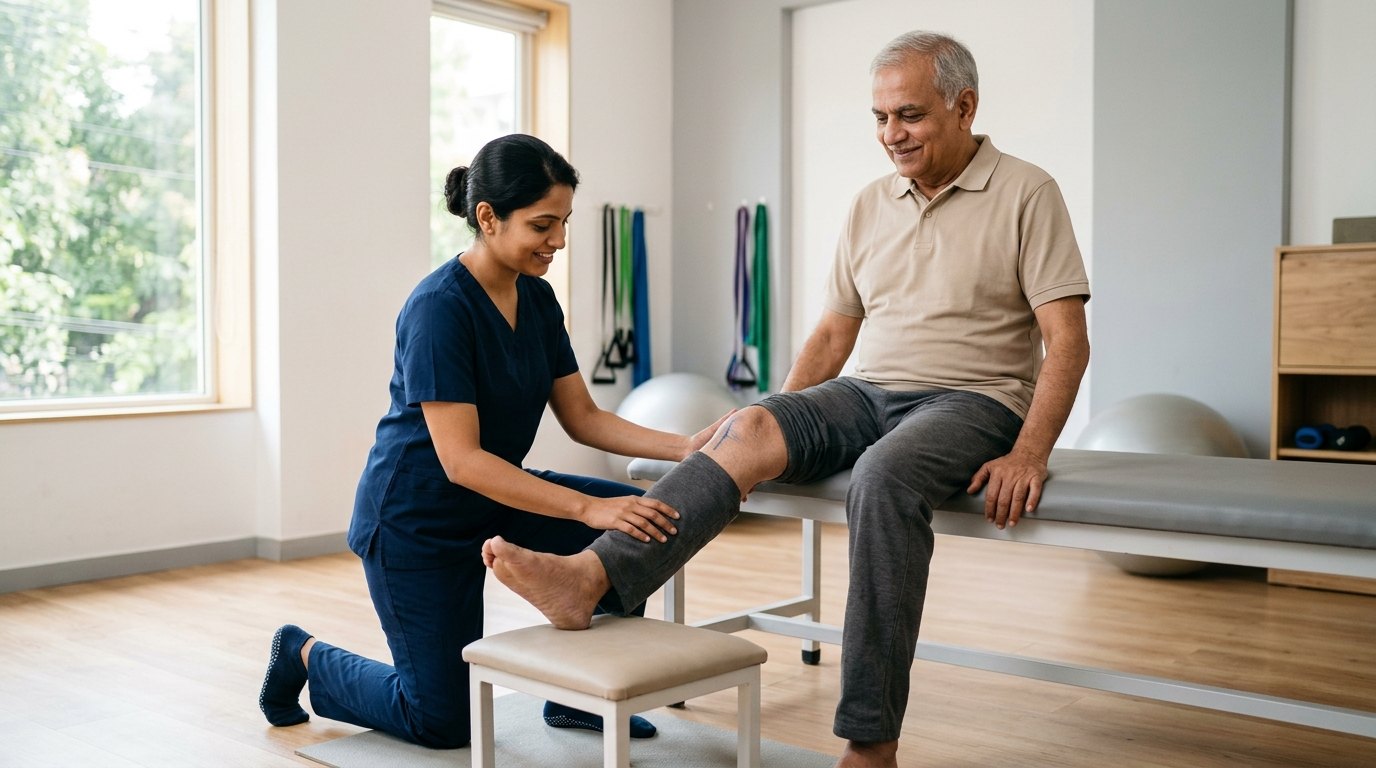
Why the early weeks matter so much
A knee replacement is a remarkable procedure — but the implant itself is only the beginning. In the first six weeks, your body is laying down the movement patterns, scar tissue and strength foundations that will define how the knee performs for years.
Research and clinical experience consistently point to the same early predictors of a good outcome: regaining full extension quickly, building flexion past 90 and then 110 degrees, controlling swelling, and walking with a normal gait pattern rather than a protective limp.
Surgery replaces the joint. Rehabilitation decides what the joint can do.
A week-by-week picture
Week one is about activation and protection: gentle range-of-motion work, swelling management, and first steps with support. Weeks two and three are where flexion milestones are won or lost — consistent daily exercise matters more here than any single therapy session.
By weeks four to six, the focus shifts to strength, gait quality and function: stairs, sit-to-stand, longer walks. This is also when many patients feel 'good enough' and quietly reduce their exercises — precisely when progressive loading would deliver the most benefit.
Where recovery commonly goes off track
The failure modes are rarely dramatic. Exercises done with poor form. Swelling that lingers because elevation and icing were skipped. A flexion plateau at 95 degrees that nobody flags because the next appointment is two weeks away.
None of these require heroics to fix — they require visibility. When adherence, range of motion and pain trends are tracked continuously, small problems are corrected while they are still small.
What a structured programme changes
A connected rehabilitation programme — clear weekly milestones, guided home exercises, therapist review of your actual progress data — turns the six critical weeks from a hopeful wait into a managed process. That is the difference between a replaced knee and a recovered life.
This article is for general information and does not constitute medical advice, diagnosis or treatment. Individual decisions should be made with appropriately qualified healthcare professionals.